
Where Hancock County Arrest News Appears
Start where the story itself points. The Hancock County Sheriff's Office runs the county's official hub, and local articles often credit its announcements or activity reports. Historic arrest PDFs live there. What the site lacks is a current public arrest log, a same-day feed, or any booking-photo search.
The weekly Hancock County Journal-Pilot is the best local news lead. Its archive is easiest to reach through the Carthage Public Library reference page, which holds microfilm, digitized PDFs, and saved e-editions. WCAZ prints periodic sheriff arrest tables. Muddy River News keeps a date-bounded county blotter and has reproduced a sheriff activity report. Prairie Communications and 97.7 WMOI cover events as they happen. These outlets serve Hamilton, Carthage, Warsaw, and other towns, yet none of them runs the jail.
Think of the local record as a chain. A story points to an official release. That release may list a date, age, city, charge, release status, or a future court date. The Circuit Clerk and Judici fill in what happened next. A correction or dismissal later on will not fix every copy of the original article.
The chain matters more in a small county. One event may surface as a sheriff announcement, then a radio table, then a weekly paper item, and finally a court entry. Each version carries its own report date and may drop a field another source kept. The library preserves articles after web pages change. An old sheriff PDF can stay online without ever proving it is complete.
Keep news separate from alerts, too. A Journal-Pilot or WCAZ push notice is editorial. Illinois VINE tracks custody status. Offender Watch handles registry alerts. None of these is a live Hancock County mugshot roster, and none proves current custody on its own.
Hancock County News Outlets Compared
Read official sources first, local ones second. The table below reflects what each outlet actually covers. It is not a promise that every arrest or photo will appear.
| Outlet or source | Coverage | Photos? | Where to start |
|---|---|---|---|
| Hancock County Sheriff | Official arrest releases, activity information, and social announcements. | No current public photo feed verified. | Sheriff source hub |
| Journal-Pilot | Weekly county news, court follow-up, warrants, and local context. | No dedicated public gallery located. | Newspaper site and library archive |
| WCAZ Radio | Weekly, monthly, and breaking sheriff or county arrest reports. | Reviewed reports are text or tables. | February 2024 report |
| Muddy River News | Multiweek county blotter and hosted activity-report copy. | No separate gallery verified. | Hancock blotter |
| Prairie Communications / WMOI | Event-driven county case stories credited to the sheriff. | Agency or generic images, not a roster. | Arrest report |
| Quill and Eagle-Scribe | Local print or community-news leads; online arrest cadence not verified. | Not established. | Confirm through local directory or library. |
| Mugshots.com | Unofficial Hancock County index with historical or stale-prone material. | Do not treat it as an official feed. | County page |
| IllinoisArrests | Separate unofficial generic county index. | No dependable current cadence verified. | Hancock page |
The WCAZ report shows the countywide table format and its source-credit role.
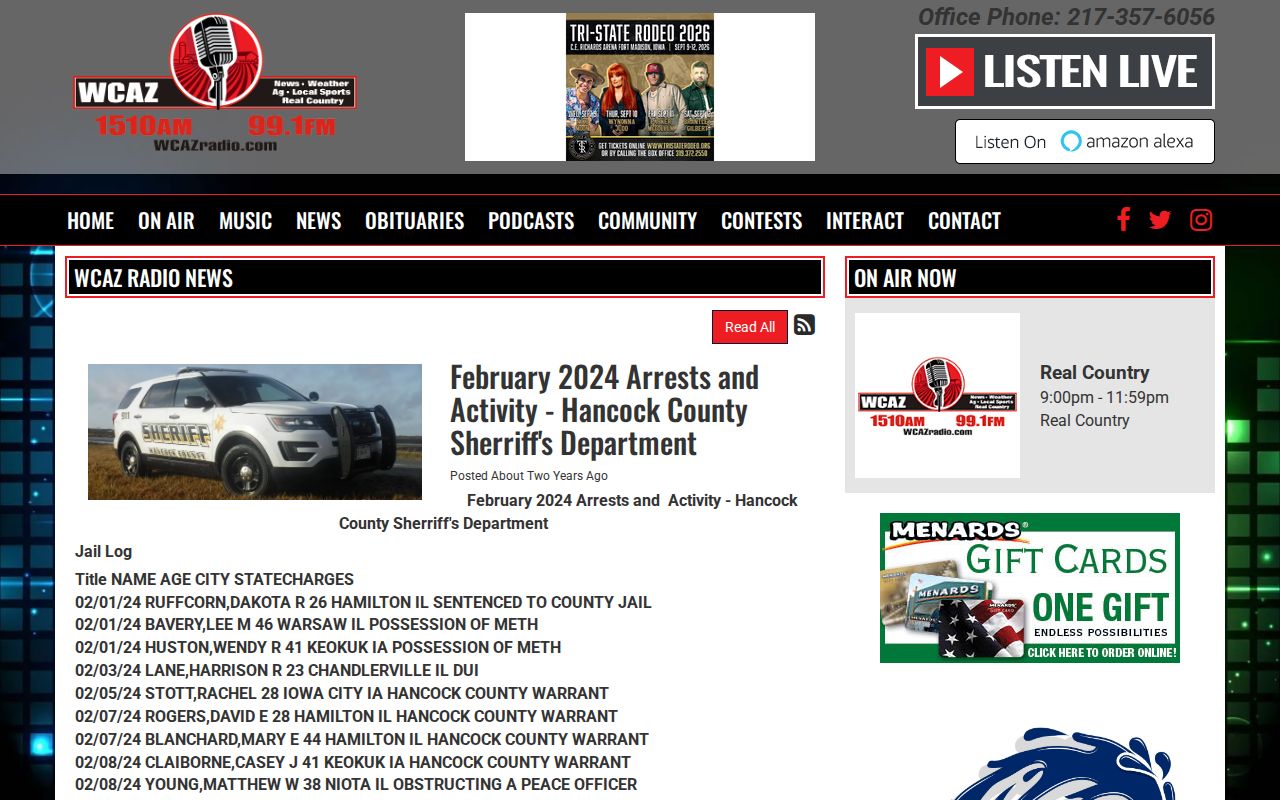
WCAZ is a quick route to a dated report. For corrections, though, the sheriff's official record still governs. Keep the original report date attached to anything you save.
The Muddy River Hancock blotter demonstrates a multiweek local-news window rather than current custody.
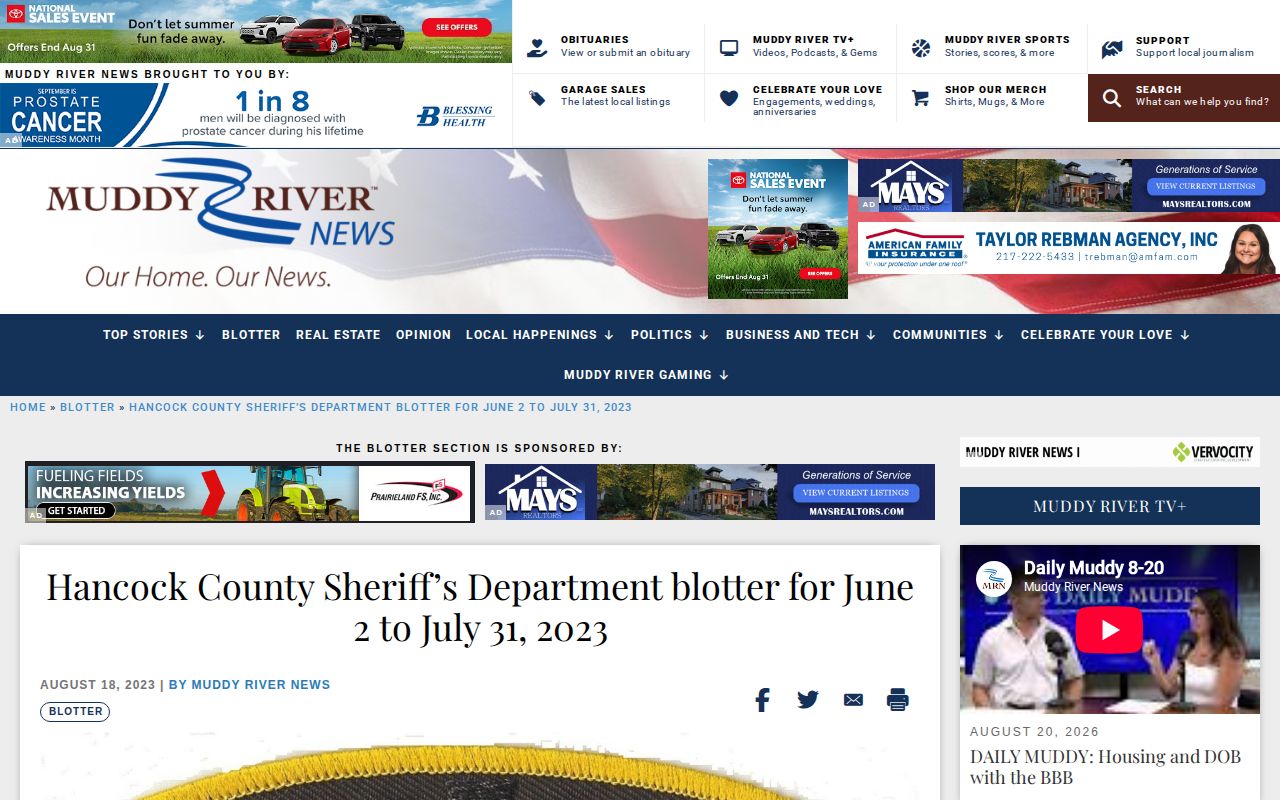
A secondary table can help in one way. Its fields may point you to the agency behind an entry. But it can miss corrections or later court outcomes. Treat it as a pointer, not a source. Prairie Communications shows how countywide stories grow out of agency announcements. Its pieces can lead you back to the original statement. They do not publish a photo schedule or a current arrest list. The record itself belongs to whoever made it. That means the sheriff, the city police, or the court.
How Hancock Booking Photos Reach News
Illinois law lets agencies release arrest information, including a photo when one exists, under 5 ILCS 140/2.15. That does not guarantee a public web image for every arrest. The photo may sit with the arresting agency, stay inside jail intake, fall under a statutory exception, or never have been taken for release at all.
Outlets get their material from sheriff press releases, social announcements, records requests, or their own reporting. The Prairie stories credit the sheriff and use agency or generic images. WCAZ and Muddy River rely on plain text tables. The Journal-Pilot matters more for weekly context and archive depth than for any current photo feed.
A second statute, 5 ILCS 160/4a, limits certain booking-photo posts on law-enforcement social accounts for lower-level offenses, with defined public-safety exceptions. Such limits do not erase the underlying record. Nor do they make an unofficial index authoritative.
News image or booking image? An article might show a scene photo, a department graphic, or an actual booking photograph. Captions can be wrong. Follow the source link, then ask the agency that holds the record.
The Prairie Communications report shows how a county story can credit sheriff information without becoming a booking roster.
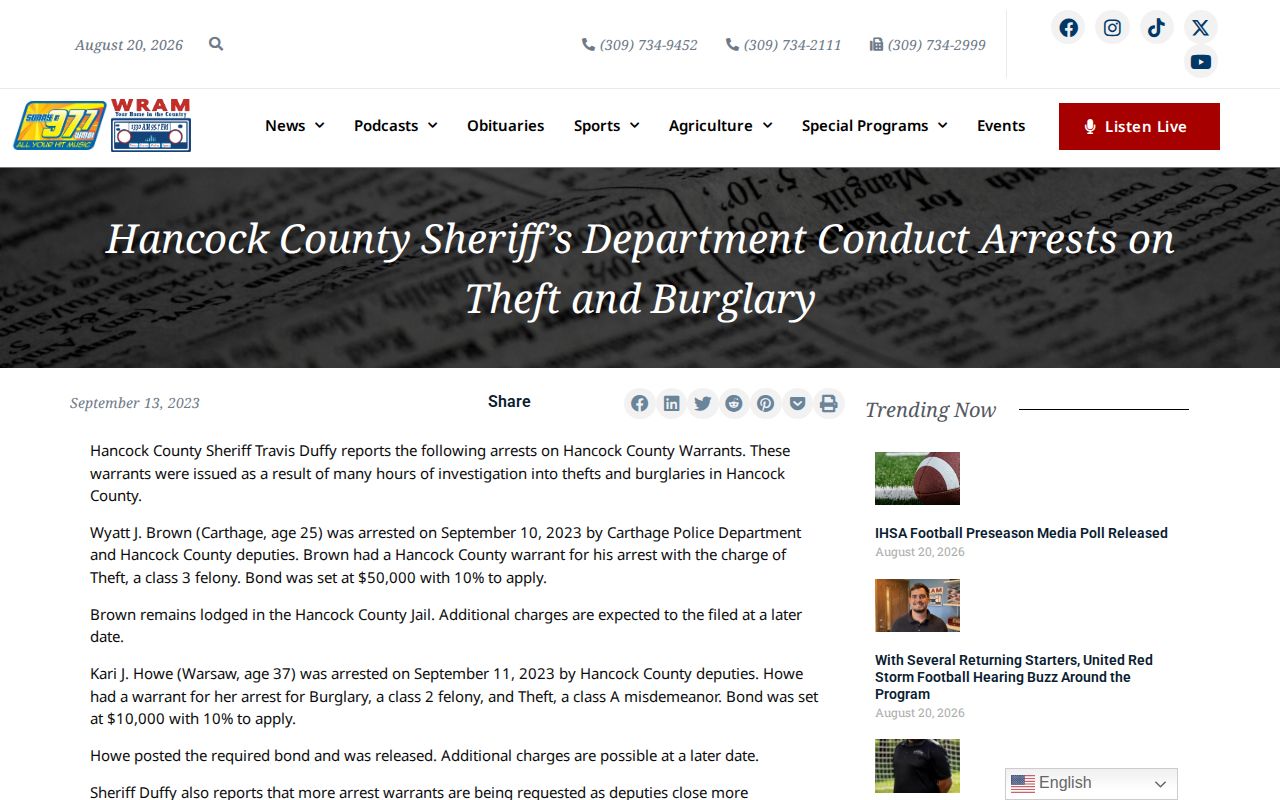
Third-party booking-photo indexes need extra care. Two sites have a confirmed Hancock, Illinois presence: Mugshots.com and IllinoisArrests. The rest do not. Busted Newspaper, RecentlyBooked, Arrests.org, and Mugshots.zone offer no verified local section here. The Hancock, Indiana page covers a different jurisdiction entirely. Skip it. Republishers also tinker with what they show. A site may redesign a page, pull a photo, or leave stale text sitting in an archive. Sometimes a record gets corrected, sealed, expunged, or tied to the wrong person. Start with the official agency and the court. Then contact the publisher with the exact URL and your paperwork. Some publishers must offer a free correction path. Still, no law forces every archive or search result to update at once.
From Hancock News to Court Records
A name in a news story is only a lead. It is not an answer. The countywide path on the Hancock County busted-mugshots home page breaks the search into pieces. Those pieces include current custody, older arrest coverage, FOIA requests, state transfers, and court outcomes. Match the source to your question. And always note the date on the article.
- Read the full story and note its publication date, arrest date, agency, city, charge wording, and source credit. Do not rely on a search-result snippet.
- Check the sheriff or city police agency for the official release. A Hamilton, Carthage, or Warsaw arrest may be held by the municipal agency even if a countywide article mentions it.
- For a custody question, call the sheriff or jail. No public live Hancock roster was verified, so an article cannot prove that a person is still held.
- For the underlying arrest or booking record, send a date-bounded FOIA request to the responsible agency and ask for a photo only when and if available.
- Use the Hancock Circuit Clerk or Judici for hearings and disposition. A dismissal, acquittal, supervision, or amended charge can change the meaning of the first report.
What a story proves. News reports, booking records, and warrant notices capture a moment in time. For the legal outcome, go to the court record.
The IllinoisArrests Hancock County page is an unofficial index example. It should be checked only after official sources and never used to infer current custody.
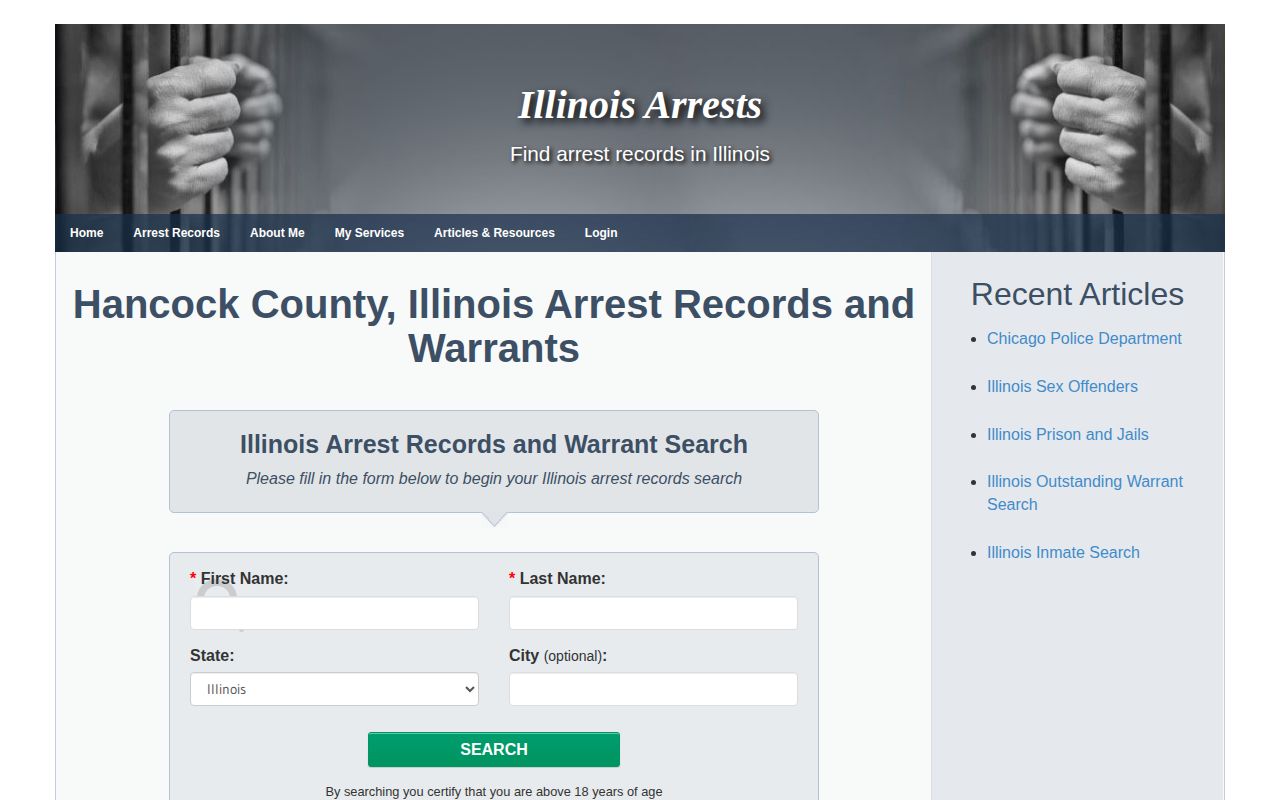
City-level help exists too. The Hamilton, Carthage, and Warsaw pages sort out which police contact applies and when the county sheriff takes over custody. That chain beats trusting one label on a commercial index. Custody status drives everything. Someone still held in county lockup is a sheriff or jail question. A released person may linger in an old article or booking entry. A sentenced person can land in IDOC. Federal and immigration detainees show up through the BOP locator or the ICE locator. So never lean on a single news story to claim someone is currently held. Corrections work best when they link back to the source. Keep the publication date, arrest date, agency, and court outcome filed together. That context shows readers exactly what a local article does and does not show.